- Empty cart.
- Continue Shopping



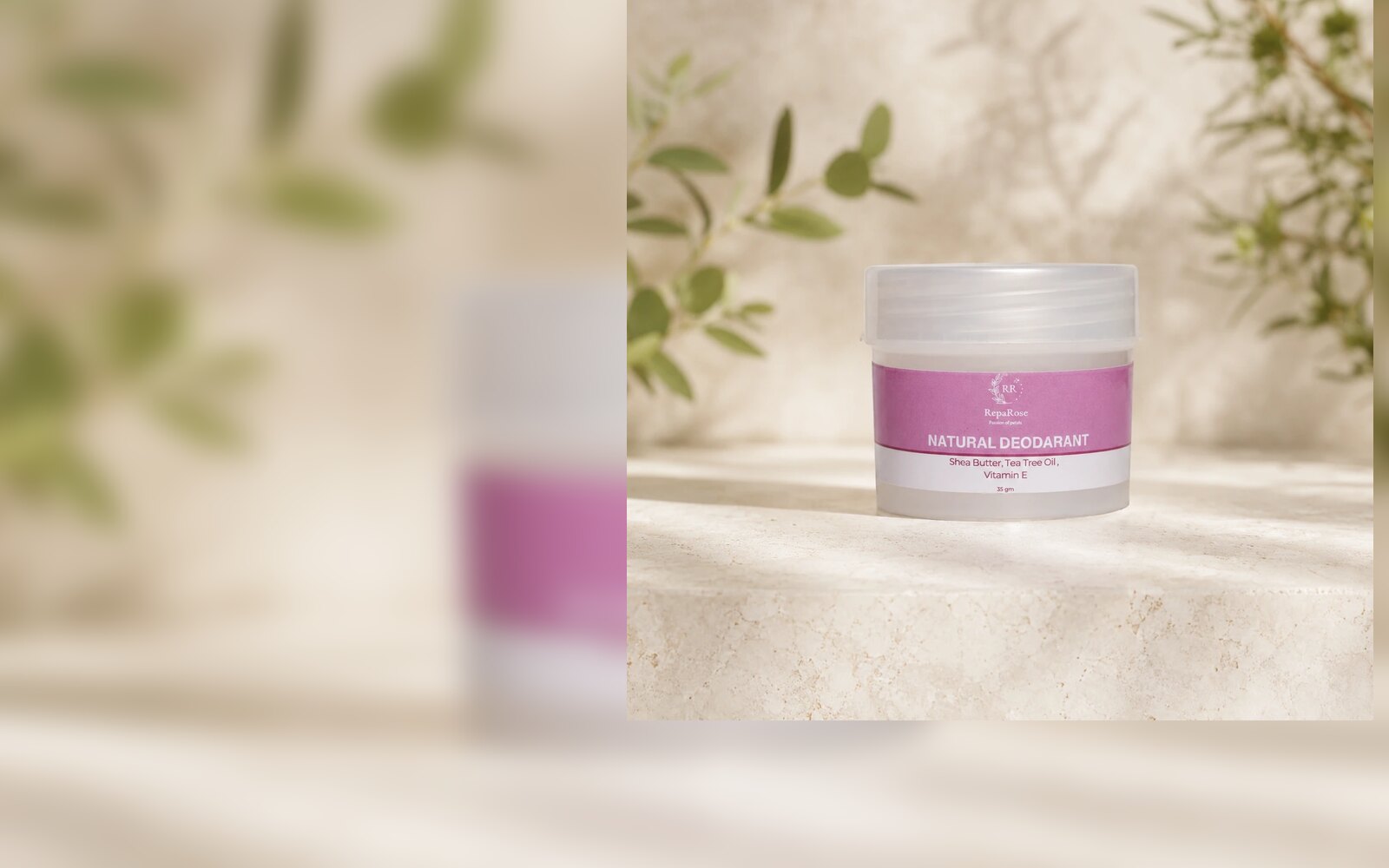
Deodorant versus antiperspirant
The two words are often used interchangeably, but they do different jobs. An antiperspirant uses aluminium salts to temporarily block sweat ducts and reduce perspiration. A deodorant does not stop sweat; it focuses on odour, using ingredients that absorb moisture, neutralise the bacteria responsible for smell and add a pleasant scent.
Natural deodorants sit in the second group. They usually rely on ingredients such as baking soda or gentler alternatives, arrowroot or corn starch to absorb moisture, plant butters and waxes for texture, and essential oils or natural fragrances. They are free from aluminium salts and, at RepaRose, from parabens and sulphates as well.
What the first weeks can feel like
If you have used an antiperspirant for years, switching can feel unusual at first. Because nothing is blocking your sweat glands any more, you may notice more moisture under the arms than you are used to. This is simply your body working normally, and many people find it becomes less noticeable within two to four weeks. Keeping a travel-size deodorant in your bag for a quick refresh during the day can make this stage feel far less daunting.
Odour can also seem stronger for a short period while the surface balance of the skin settles. Consistency matters here: applying the deodorant daily to clean, dry skin, and reapplying after exercise, usually makes the adjustment much smoother.
Tips for a smoother switch
A few small habits make the transition easier for most people:
- Wash the underarms with a gentle, sulphate-free cleanser and dry them completely before applying.
- Use a thin layer; natural formulas are concentrated and more product does not mean more protection.
- Wear breathable fabrics such as cotton and linen during the first weeks, especially in warm weather.
- Give your skin a rest from shaving on the days you start, since freshly shaved skin can be more sensitive to any new product.
If you notice redness or itching, the formula may contain more baking soda than your skin enjoys. Look for a sensitive version with a lower concentration or a baking-soda-free formula, and always patch test a new deodorant on a small area first.
What to expect long term
Once the adjustment period passes, most people settle into a comfortable routine. You will still sweat, because sweating is a healthy function, but odour is kept in check and the skin under the arms often feels softer, since natural formulas tend to include nourishing oils and butters.
Natural deodorants are a personal preference rather than a medical necessity, and there is no wrong choice. If you prefer to reduce sweat as well as odour, an antiperspirant may suit you better. If you want fresh underarms with a short, recognisable ingredient list, a natural deodorant is a gentle and pleasant way to get there.